

Your daily news update on Europe
Provided by AGP
Nordic civil society met at the Danish Parliament to advance coordination on Ukraine’s support and Nordic resilience
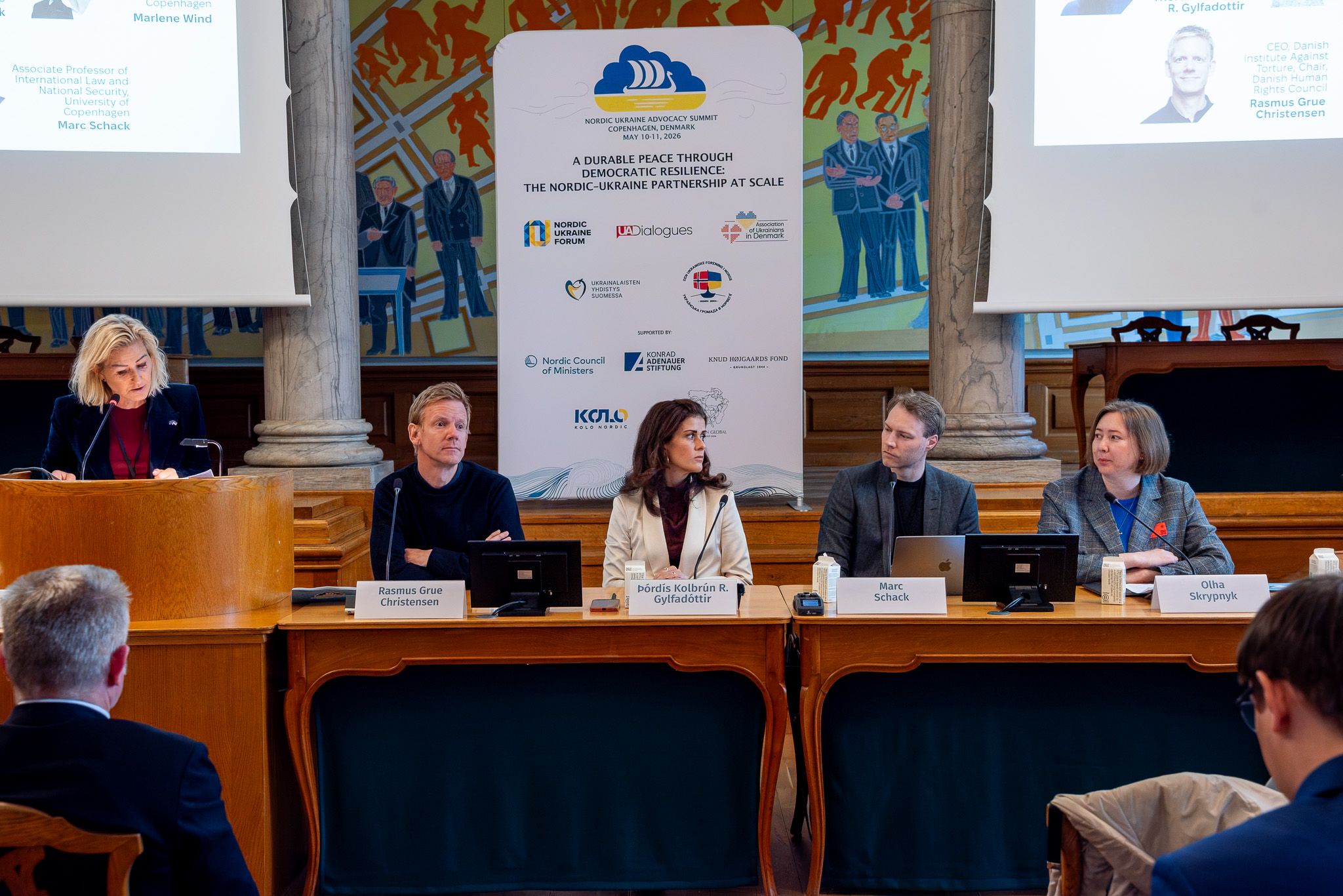
Nordic Ukraine Advocacy Summit 2026 in Copenhagen
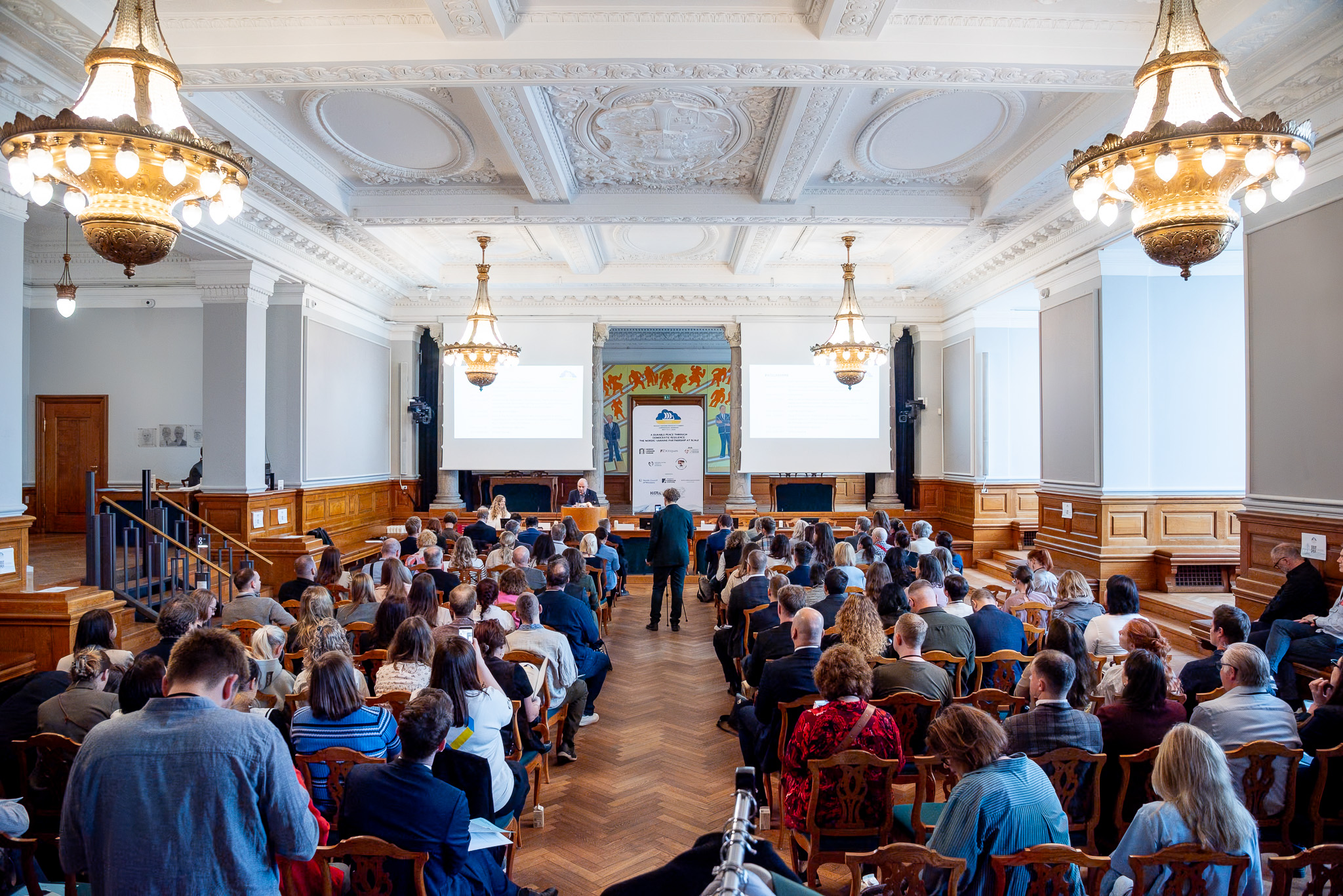
Nordic Ukraince Advocacy Summit 2026: Participants
The fourth Nordic Ukraine Advocacy Summit convened in Copenhagen, bringing civil society and policymakers to discuss support for Ukraine and Nordic resilience.
COPENHAGEN, CAPITAL REGION OF DENMARK, DENMARK, May 13, 2026 /EINPresswire.com/ -- On 11 May 2026, the fourth Nordic Ukraine Advocacy Summit (NUAS) 2026 convened at the Danish Parliament under the theme “A Durable Peace Through Democratic Resilience: The Nordic–Ukraine Partnership at Scale.” The Summit served as a high-level forum for strategic dialogue on Ukraine’s support, Nordic security, and the role of civil society in responding to war, democratic threats, and long-term regional resilience.Ensuring a Just Peace
The first panel, “Ensuring a Just Peace,” addressed Russia’s war crimes in the temporarily occupied territories and the international response.
Thórdís Kolbrún Reykfjörd Gylfadóttir (Iceland), Special Envoy of the Council of Europe on Ukrainian children, highlighted that there are about 25000 documented cases of child deportation by Russia from Ukraine, while almost 1.5 million children stay on the occupied territories. She recognized that Ukraine is trying to return and rehabilitate every child, and NGOs play an essential role in the documentation of the abduction cases, advocating for the children, and drawing attention to these crimes. Thórdís Kolbrún emphasized that we cannot afford the global consequences of abandoning accountability.
Olha Skrypnyk (Ukraine), human rights defender, Head of the Board of the Crimean Human Rights Group, stated that more than 3.5 million Ukrainians remain under occupation, and that supporting civil society organisations that document human rights violations is critical.
Rasmus Grue Christensen (Denmark), CEO of DIGNITY and Chair of the Danish Human Rights Council, underscored a significant gap between documenting crimes and delivering consequences for the perpetrator. He added that Ukrainian society carries this heavy burden alone. Rasmus emphasized that justice is crucial for peace and that democratic societies have now a better chance of ensuring accountability.
Nordic Response to Hybrid Threats
The second panel, “Nordic Response to Hybrid Threats,” focused on the Nordic democratic response to anti-democratic regimes and on countering the destructive narratives and disinformation.
Magnus Hjort (Sweden), Director General of the Swedish Psychological Defence Agency, called for stronger strategic responses. He pointed out that there is no time for alarmism, but time to take the situation very seriously and ensure balanced communication between the governments and population. We must raise the costs and risks for the threat actors and go from threat assessment to threat deterrence.
Jeanette Serritzlev (Denmark), Military Analyst, Royal Danish Defence College, noted that all actions have a cognitive effect, and the attacks are targeted at weakening the cohesion in our societies. Even though people tend to believe that they are more resilient to information threats, those threats are transnational in nature.
Mikko Salo (Finland), founder of Faktabaari, a fact-checking and media-literacy service, said that threat actors align their interests on digital platforms, and that the effect of GenAI is massive - we are three years late. The solution is to follow the “stop-think-check” approach, to educate young people, and to rely on the community and sustained engagement.
Volodymyr Dehtyarov (Ukraine), Public Affairs Officer, 2nd Corps "Khartiia", National Guard of Ukraine, shared Ukrainian practical perspectives on information warfare. He pointed out that Russia is doing what it has been doing for centuries: creating a division between the civilians, government, and army. Ukrainian response is better societal resilience and cohesion. An efficient way to achieve this is to teach critical thinking, analysis, and fact-checking to both military personnel and the civilian population. He underscored the necessity of being proactive in this field, as merely defending doesn't work enough.
Nordic-Ukraine Civic Axis
The third panel, “Nordic-Ukraine Civic Axis”, " delved deep into the discussion on integration of Nordic CSOs into a Nordic support system for Ukraine and Nordic resilience.
Jorun Sigrid Nossum (Norway), Director at Norwegian Agency for Development Cooperation, shared their key learning: the need to deliver short-term solutions with a long-term perspective at high speed. She commented on the Ukrainian objection to the traditional donor-recipient relationship and how it encouraged a transformation into a mutual strategic partnership.
Kristina Háfoss (Faroe Islands), Secretary General of the Nordic Council observed how the Nordics are learning from the Ukrainian experience, who are frontrunners in multiple areas. She drew particular attention to how well Ukrainian civic society functions during wartime.
Tymofiy Brik (Ukraine), Rector at Kyiv School of Economics, described how Ukrainian society moved through stages, from relying on human capital and individual skills, to strengthening the institutions, and the next step is to recognize the importance of culture, that is having people with shared origin and values who care for democracy. He noted that the Nordics would be a major source of inspiration for building lasting trust.
Orest Bilous (Ukraine), CEO of Boryviter Centre of Excellence, an independent non-profit Ukrainian defence institution, remarked that civic society has been very efficient in wartime, as it has no bureaucracy or speed limits. He pointed out the relevance of the Nordic concept of total defense, uniting the army with civilians, government, and business.
Christian Friis Bach (Denmark), Former Member of Parliament, Former Executive Secretary, UNECE stated that civic society organisations are crucial to ensure cohesion and help the authorities build accountability with the local society. He emphasized that localization in humanitarian support is a key to success.
Lolita Čigāne (Latvia), Senior Adviser on EU Integration at the EU Advisory Mission Ukraine, said that Ukraine offers a powerful lesson in standing strong and defining itself. She underscored the significant role of Ukrainian civic society, which is highly professional, well-organized, and cooperative. She identified the Nordics and Baltics as close friends of Ukraine who really understand the challenge.
Alina Zubkovych (Sweden), Head of the Nordic Ukraine Forum, the summit's founder, summarized: "We came here as a network of friends, but we leave as a coordinated system of partners. The Nordic-Ukraine civic axis is no longer just a vision - it is a strategic reality that guards the peace of both our regions.”
NUAS 2026 is organized by Nordic Ukraine Forum, Ukrainian Dialogues, Association of Ukrainians in Denmark, Ukrainian Association in Norway, and Association of Ukrainians in Finland. The summit is supported by the Nordic Council of Ministers, Konrad-Adenauer-Stiftung e.V. and Knud Højgaards Fond.
Yuliya Kindra
Ukrainian Dialogues
+45 28 69 11 93
email us here
Legal Disclaimer:
EIN Presswire provides this news content "as is" without warranty of any kind. We do not accept any responsibility or liability for the accuracy, content, images, videos, licenses, completeness, legality, or reliability of the information contained in this article. If you have any complaints or copyright issues related to this article, kindly contact the author above.
