

Top Linear and Power Station Valves Manufacturer Advances Industrial Flow Control Solutions
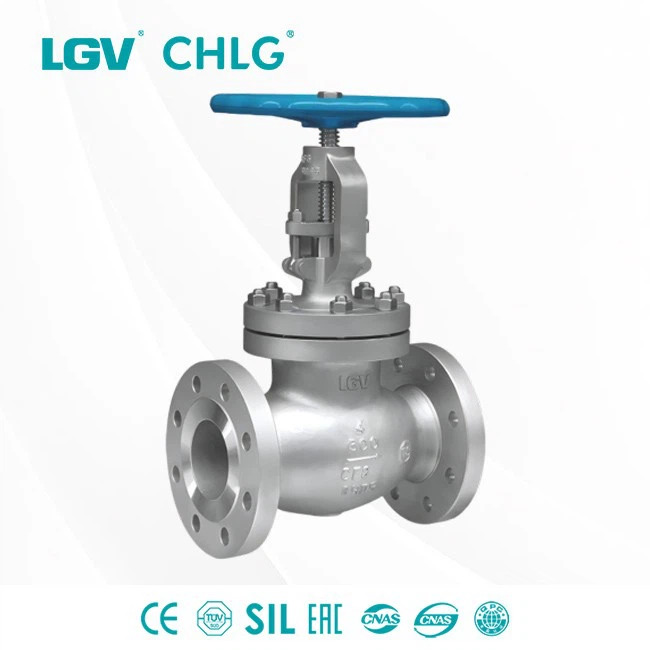
Cast Steel Globe Valve
WENZHOU, ZHEJIANG, CHINA, October 9, 2026 /EINPresswire.com/ --
As industrial facilities continue to demand reliable flow control, operational safety, and long-term equipment performance, Lianggu Valve Group Co., Ltd. is strengthening its position in the industrial valve manufacturing sector. Founded in 1989, the company has developed a broad portfolio of valve products for applications spanning power generation, oil and gas, petrochemical processing, natural gas, metallurgy, municipal infrastructure, and other industrial sectors. With a product range that includes linear-motion valves, power station valves, and specialized flow control equipment, Lianggu Valve Group Co., Ltd. serves a market where engineering precision and dependable performance are essential to maintaining safe and efficient operations.
Industrial valves are critical components in piping systems because they regulate, direct, isolate, or prevent the reverse flow of liquids, gases, steam, and other process media. The correct valve selection can influence system efficiency, maintenance requirements, pressure management, and plant safety. In industries such as power generation and chemical processing, valves may operate under high pressure, elevated temperatures, corrosive conditions, or frequent operating cycles. Manufacturers must therefore consider material selection, structural integrity, sealing performance, manufacturing accuracy, and applicable industry standards when developing products for demanding environments.
Lianggu Valve Group Co., Ltd. has established its product offering around these varied industrial requirements. Its portfolio includes gate valves, globe valves, check valves, ball valves, butterfly valves, regulating valves, safety valves, forged-steel valves, cryogenic valves, and power station valves. This breadth allows the company to serve different flow-control functions, from routine pipeline isolation to more specialized applications that require precise regulation or protection against reverse flow. Its product range also includes Non-Return and Control Valves and Rotary Valves, reflecting the different mechanical approaches used in modern industrial flow management.
Linear and power station valves remain important categories in industrial infrastructure. Linear-motion valves generally operate through the movement of a closure element along a defined path, allowing the valve to open, close, or regulate a flow passage according to its design. Gate valves are commonly used for isolation, while globe valves are frequently selected where flow regulation is required. The appropriate valve depends on the operating conditions, pressure drop, process medium, frequency of operation, and the function required within the piping system.
Power station valves face additional engineering demands because power-generation systems can involve high-temperature steam, boiler feedwater, condensate, and other process streams. These systems require valves capable of operating reliably through pressure changes, thermal cycling, and repeated operating sequences. Body material, trim design, packing, bolting, sealing arrangements, and connection types must all be selected according to the specific application. Lianggu Valve Group Co., Ltd. offers power station valve products designed for industrial power applications, with technical configurations requiring confirmation against individual project specifications.
For power plant operators and engineering contractors, valve reliability is closely connected with the overall availability of plant equipment. A valve that fails to isolate a line properly, experiences leakage, or becomes difficult to operate can complicate maintenance and potentially affect plant operation. Manufacturers must therefore place considerable emphasis on design verification, machining accuracy, assembly procedures, and performance testing. The final valve configuration should also correspond to the system's design pressure, operating temperature, process medium, and applicable technical requirements.
Non-Return and Control Valves represent another important part of the industrial valve market. Non-return valves, commonly known as check valves, are designed to allow flow in the intended direction while limiting reverse flow. They are used in applications such as pump discharge lines, water systems, industrial process piping, and other installations where reverse flow could damage equipment or disrupt operation. Depending on their design, these valves may use swing, lift, dual-plate, or other closure mechanisms.
Selecting an appropriate non-return valve requires consideration of more than nominal pipe size. Flow velocity, pressure differential, installation orientation, potential water hammer, process fluid characteristics, and system layout can all influence performance. A valve designed for one operating condition may not be suitable for another, particularly when rapid flow changes or frequent cycling are involved. For this reason, technical evaluation and clear specification review are important steps in industrial procurement.
Control valves serve a different but complementary purpose. They are used to adjust flow, pressure, temperature, or liquid level by changing the resistance to flow within a process system. In automated industrial facilities, control valves can operate alongside sensors, controllers, and actuators to maintain process conditions within defined operating ranges. Their performance can influence process stability, energy consumption, product consistency, and equipment protection.
For manufacturers such as Lianggu Valve Group Co., Ltd., supporting these applications requires an understanding of the relationship between valve design and the broader process system. Factors such as flow characteristics, pressure drop, actuator requirements, materials compatibility, and maintenance access may all affect the final selection. The company's wider portfolio of isolation, non-return, and regulating valve products provides options for different functions within industrial piping networks.
Rotary Valves form another product category with a distinct operating principle. Rotary mechanisms use rotational movement to change the position of a closure element or control passage. Depending on the valve design, this can support functions such as opening and closing a line, regulating flow, or controlling the passage of a medium through a pipeline. Rotary valve designs are used across different industries, although their specific capabilities and limitations depend on the construction and intended service.
The advantages of rotary operation can include compact mechanical arrangements, straightforward movement, and compatibility with manual, pneumatic, or electric actuation in suitable designs. However, valve selection must still account for sealing requirements, operating torque, pressure and temperature ratings, the properties of the process medium, and the frequency of operation. These factors are particularly important when a valve is integrated into an automated production system or used in a demanding industrial environment.
Lianggu Valve Group Co., Ltd. integrates product design and development with manufacturing and inspection activities. Company information describes capabilities covering mold development, casting and forging production, mechanical processing, assembly, performance testing, and quality inspection. This combination of activities is relevant to industrial valve manufacturing because product performance depends on the quality of the complete production process rather than any single manufacturing stage.
Casting and forging are important processes for producing valve bodies and other pressure-bearing components. The choice between them depends on factors such as valve design, material, pressure requirements, component geometry, and the applicable engineering specification. Subsequent machining establishes the dimensions and surface characteristics required for assembly, while inspection helps confirm that components meet the relevant technical requirements. Proper assembly and testing then provide additional checks before products are delivered.
Precision machining is particularly important for sealing surfaces, stem interfaces, internal flow passages, and other functional areas. Dimensional variation or surface defects can affect valve movement, sealing performance, and service life. For valves used in high-pressure or high-temperature applications, manufacturing control and suitable testing are essential elements of product qualification. Non-destructive examination and pressure testing may also be required according to the valve design, applicable standard, and project specification.
The company reports operating multiple manufacturing bases in Wenzhou and Lishui, Zhejiang Province. Its official website describes a group structure with nine wholly controlled subsidiaries, more than 1,200 employees, and over 400 CNC/NC machine tools and machining centers. These resources support a broad industrial valve portfolio and provide the manufacturing infrastructure needed to serve different product categories. Specific production arrangements and technical capabilities should be evaluated against the requirements of each order or project.
Quality assurance is another significant consideration for valve buyers. Industrial projects may specify standards and certifications according to the application, destination market, pressure class, and valve type. Lianggu Valve Group Co., Ltd. lists quality and product approvals including API-related certifications, CE/PED, ISO 9001, ISO 14001, and ISO 45001 on its corporate website. Buyers should verify the current validity and precise scope of any certificate, along with the standards applicable to the particular product being purchased.
The company's valves serve industries where dependable flow control is essential. In power generation, valves support steam, water, and auxiliary systems. In oil and gas operations, they are used in process pipelines and associated facilities. Chemical and petrochemical plants require products compatible with specific media, pressures, and temperatures, while municipal infrastructure uses valves in water distribution and related systems. Each sector presents different requirements, making application-specific engineering an important part of the valve selection process.
International sourcing has also increased the importance of technical communication between manufacturers, engineering contractors, distributors, and end users. Buyers may need detailed information on body materials, pressure ratings, connection dimensions, operating temperatures, sealing arrangements, actuation, testing, and documentation. Clear specifications help reduce the risk of mismatched products and make it easier to plan installation, commissioning, and future maintenance.
Lianggu Valve Group Co., Ltd. describes its service offering as covering pre-sales application review, valve selection, technical proposals, engineering coordination, inspection, project documentation, installation guidance, and after-sales support. Such services can be relevant for customers managing projects in which multiple valve types must be coordinated across a wider piping system. Effective communication before and after delivery can help clarify operating requirements and support more efficient product integration.
Maintenance planning remains a major consideration throughout the lifecycle of industrial valves. Depending on the application, inspections may cover external leakage, packing condition, actuator operation, corrosion, unusual noise, vibration, and changes in operating performance. Maintenance intervals should be established according to the valve design, service conditions, manufacturer guidance, and the criticality of the equipment. For power station valves in particular, thermal cycling and operating conditions may influence inspection and maintenance planning.
The industrial valve market is also responding to broader developments in automation, energy efficiency, and infrastructure modernization. Automated actuation and improved monitoring can help operators manage valve position and system performance more effectively. At the same time, established mechanical designs remain important because industrial systems require dependable isolation, regulation, and protection under a wide range of operating conditions. Manufacturers must therefore combine proven engineering principles with continued product development.
For Lianggu Valve Group Co., Ltd., a broad product portfolio provides a basis for serving customers with different flow-control needs. Non-Return and Control Valves address functions associated with reverse-flow prevention and process regulation, while Rotary Valves offer another approach to controlling flow through rotational mechanisms. Alongside its power station and linear-motion valve products, these categories contribute to a portfolio designed for varied industrial applications.
As industrial operators continue to prioritize safety, operational continuity, and lifecycle performance, valve manufacturers will remain important partners in the development and maintenance of process infrastructure. Product suitability depends on careful engineering evaluation, appropriate materials, manufacturing quality, and compliance with project specifications. By combining multiple valve categories with manufacturing and technical support capabilities, Lianggu Valve Group Co., Ltd. continues to participate in this demanding industrial market.
About Lianggu Valve Group Co., Ltd.
Lianggu Valve Group Co., Ltd. is a China-based industrial valve manufacturer headquartered in Wenzhou, Zhejiang Province. Founded in 1989, the company integrates valve design, research and development, manufacturing, machining, assembly, testing, and sales. Its product portfolio includes gate valves, globe valves, check valves, ball valves, butterfly valves, regulating valves, safety valves, power station valves, forged-steel valves, cryogenic valves, Non-Return and Control Valves, and Rotary Valves. The company's products serve industries including power generation, oil and gas, petrochemicals, natural gas, metallurgy, municipal infrastructure, and other industrial applications. Lianggu reports operating multiple manufacturing bases and providing technical assistance from product selection through after-sales service. More information about Lianggu Valve Group Co., Ltd., its product range, and its industrial valve solutions is available through its website, [www.chlgvalve.com].
Address: No. 32, Gangqiang Road, Yongxing Street, Longwan District, Wenzhou City, Zhejiang Province, China
Official Website: https://www.chlgvalve.com/
Clair Xie
Lianggu Valve Group Co., Ltd.
info@chlgvalve.com
Legal Disclaimer:
EIN Presswire provides this news content "as is" without warranty of any kind. We do not accept any responsibility or liability for the accuracy, content, images, videos, licenses, completeness, legality, or reliability of the information contained in this article. If you have any complaints or copyright issues related to this article, kindly contact the author above.
